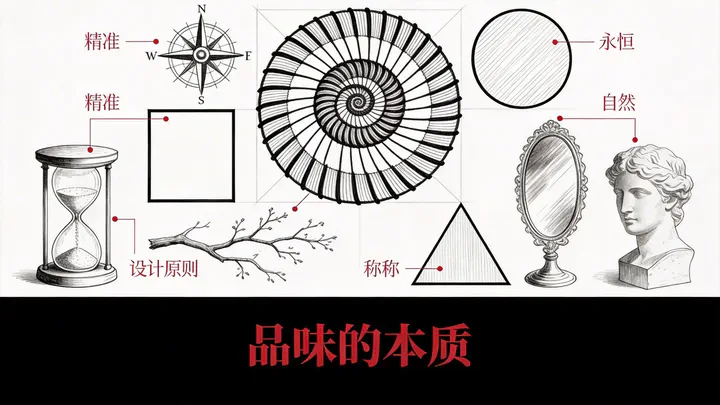
Paul Graham opens this essay with an intriguing question: what is “taste”?
He mentions an MIT professor who complains that nowadays, applicants have solid technical skills but are missing something crucial. That “something” is taste—the ability to create beautiful things, not just to get things right.
The essay begins with three epigraphs pointing to the same truth: beauty transcends individual disciplines—it appears across mathematics, art, and science. Copernicus would reject astronomical models for not being “elegant enough.” Mathematician Hardy said “there is no permanent place in this world for ugly mathematics.”
Taste Isn’t Subjective

Many people claim “taste is subjective,” but if you think carefully, this statement contradicts itself.
You tell kids “everyone has different preferences,” then turn around and call Leonardo a genius. Designers who’ve worked for a few years look back at their early work and think “how did I make such ugly stuff back then?”
If taste were truly subjective, there would be no such thing as “progress.” Your work would just be “different,” not “better.” But every professional designer knows they’re improving. What does this tell us? Good and bad design genuinely exist—it’s not the relativism you imagine.
Admitting this is crucial. Once you acknowledge that “good design” is real, you can study it rather than treating taste as some mysterious innate gift. You can learn how to create better things, just like learning to write better code.
Principles of Good Design
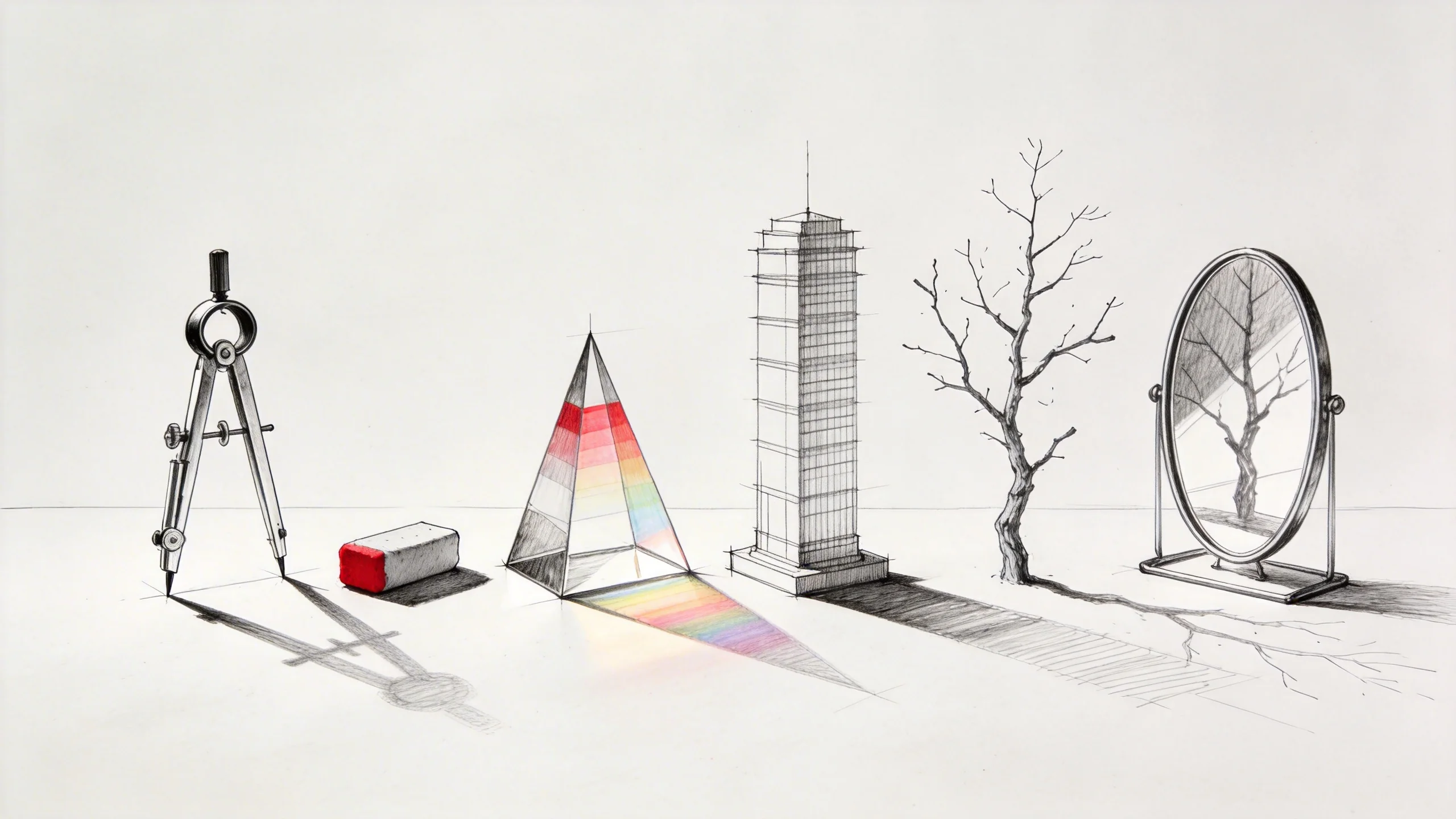
Paul Graham summarizes numerous shared traits of good design. These aren’t principles he invented—they’re common patterns he observed across mathematics, painting, architecture, writing, and other fields.
1. Good Design Is Simple
Good design is always as simple as possible.
Shorter mathematical proofs are better. Architects say “less is more”—structure matters more than decoration. Same with writing: Virgil said “brevity is the hallmark of true elegance.”
Why is simplicity so important? Because complexity often masks insufficient substance—using flashiness to cover emptiness. When you truly understand a problem, the solution is usually elegant. Complex solutions typically mean you haven’t grasped the essence yet.
Decoration isn’t inherently wrong, but it should be supplementary, not primary. Renaissance architecture had elaborate ornamentation, but it was built on solid structure. If the structure itself fails, no amount of decoration can save it.
2. Good Design Is Timeless
Works that endure across generations rely on inherent value, not following trends.
Here’s a counterintuitive insight: if you want your work to be popular in the future, the best approach is to appeal to past aesthetics. Why? Because future generations will ignore current fashions just like you do.
Designers easily fall into the “fashion trap.” You see a trendy style and want to use it. But fashion is like the stock market—by the time you notice it’s rising, it’s already too late. The smart move is to study what’s remained beautiful for centuries or millennia.
This doesn’t mean going retro. It means aiming for values that transcend eras. The Eiffel Tower doesn’t look like an 1889 building at all, yet it was built in 1889. It remains beautiful because its beauty doesn’t depend on period fashion.
3. Good Design Solves Real Problems
Good design addresses actual human needs, not theoretical “purity.”
Paul Graham uses fonts as an example. Sans-serif fonts (like Helvetica) are theoretically more “pure”—the simplest letter forms. But when actually reading, serif fonts like Times Roman are more comfortable. Why? Because those “decorative” serifs actually serve a function—they help eyes recognize letters and make reading smoother.
This example is important because it demonstrates a principle: theoretical correctness doesn’t equal practical correctness. Many designers fall into theoretical traps, thinking certain solutions are “theoretically more elegant” while ignoring actual users.
Sometimes you can even redefine the problem itself. Rather than stubbornly solving a difficult problem, step back and ask: is this really the problem I should be solving? Is there a better problem waiting for my attention?
4. Good Design Is Suggestive (Leaves Space)
Jane Austen’s novels rarely describe scenes in detail, yet readers vividly imagine them. Why? Because she gave you the framework and let your brain fill in the details.
This principle is especially important in architecture and software. Good architecture should be a neutral backdrop, letting inhabitants fill it with their lives rather than imposing the architect’s vision. Ever seen a “designer’s house”? Full of the architect’s personal expression, leaving no space for the actual residents.
Same with software. Unix tools are powerful because they provide basic elements (pipes, redirection, regular expressions) for users to combine freely, rather than designing everything. Give users Lego blocks, not prefabricated houses.
5. Good Design Often Has Humor
Great works often carry subtle humor. Dürer’s engravings, the Pantheon’s dome, Gödel’s incompleteness theorem—all possess this quality.
What does humor represent? Confidence and strength. People who don’t take themselves too seriously often do better work. They’re not afraid of mistakes or mockery, so they dare to try new things.
Conversely, works that are too serious, too stiff, often lack vitality. They may be technically flawless but soulless. Like people who never smile—hard to befriend.
6. Good Design Is Hard
Difficult problems force elegant solutions.
Mountain climbers discard everything unnecessary because every gram is a burden. Architects with tight budgets design more beautifully because they can’t solve problems by piling on materials—they must think about essence.
Painting faces is far harder than painting trees. Why? Because a 5-degree eye angle shift is noticeable, but a crooked branch isn’t. The human face is a “hard problem”—it doesn’t allow you to cut corners, demanding precision. That’s why portraits better demonstrate a painter’s skill than landscapes.
From another angle, if you want to practice design, tackle difficult problems. Don’t do projects where you can easily fake it—you won’t learn anything.
7. Good Design Looks Effortless
Good work appears effortless, yet tremendous effort went into it.
Leonardo’s line drawings demanded perfection—one stroke defined everything, no room for correction. One mistake and everything collapses. But looking at the finished work, it seems like he casually sketched it, flowing naturally.
This is mastery: making difficult things look simple. Athletes performing complex moves look like they’re strolling. Musicians playing intricate pieces appear relaxed as if chatting. Not because it’s actually easy, but because they’ve practiced thousands of times until skill became unconscious competence.
When skills become unconscious, consciousness can focus on genuinely difficult parts—creative decisions rather than mechanical execution.
8. Good Design Uses Symmetry
Symmetry appears throughout nature and good design. Paul Graham distinguishes two types: repetition and recursion.
Repetition is straightforward—the same element repeating. But recursion is more interesting: subelements also repeat the overall pattern.
The Eiffel Tower exemplifies recursive symmetry. Look at the whole—four legs converging to a point. Zoom in on each leg—it’s also composed of smaller structures converging. Zoom further—those smaller structures follow the same pattern. This self-similarity creates stunning visual impact.
But be careful—symmetry can also excuse laziness. Some designers use symmetry because it “looks nice,” not because it genuinely fits the problem’s essence. Symmetry should be a natural result of the solution, not an imposed template.
9. Good Design Imitates Nature
Nature represents millions of years of problem-solving, tested by the most brutal criterion: survival of the fittest.
When painters work from life, their minds have something to contemplate, improving hand execution. You might think life drawing just trains hand-eye coordination, but actually, it trains observation—how to see things as they really are, not as you think they are.
Early aircraft designers failed at imitating birds due to technological limitations. They tried mimicking flapping wings, but materials and power systems couldn’t handle it. Later planes didn’t look like birds at all, yet flew better.
What does this tell us? Imitating nature isn’t copying—it’s understanding principles. Birds fly because they solved lift, not because their wings flap. Once you understand the principle, you might implement it completely differently.
10. Good Design Requires Redesign
Experts know first attempts usually fail. True creation is an iterative process.
Leonardo’s sketches show multiple line attempts. He didn’t get it right with one stroke—he tried many times to find the best line. The Porsche 911’s iconic rear emerged from repeated prototype revisions, not perfect initial design.
Why did oil painting replace tempera during the Renaissance? Because oil paint allows blending and overpainting. You can paint, be dissatisfied, and paint over it. This let painters tackle complex subjects like human figures, knowing mistakes could be fixed.
Good tools should support revision. If a tool doesn’t allow mistakes, you won’t dare attempt difficult things. Software version control systems exist for this reason—letting you experiment freely, knowing you can always revert.
11. Good Design Involves Copying (But With Taste)
Novices follow an interesting growth trajectory: unconscious imitation, then conscious pursuit of originality, finally realizing that correctness matters more than novelty.
The greatest masters freely borrow others’ ideas without losing their personal style. Shakespeare’s plays often adapted others’ stories, yet after reading, you only remember Shakespeare, not the original author.
They care about correct answers, not false originality. If an idea is right, why abandon it just because “someone else used it”?
But there’s a nuance here. Beginners copy because they don’t know how. Masters “copy” because they know it’s right. Beginners remain clueless after copying; masters can reinterpret it their own way.
12. Good Design Often Feels Strange
Exceptional work possesses an uncanny quality—Euler’s Formula, Bruegel’s paintings, the SR-71 Blackbird. They seem “off” somehow, yet you can’t pinpoint why. Where does this strangeness come from?
Strangeness can’t be deliberately cultivated—it’s a byproduct of pursuing truth and excellence.
When you genuinely solve a difficult problem, the solution often looks “weird” because most people didn’t think it could be done that way. The SR-71 looks like alien technology because its design completely serves the extreme requirement of “Mach 3 flight” with zero compromise.
Trying to develop a “unique style” is futile. The more you want to be different, the more clichéd you become. True style emerges naturally when you consistently pursue quality.
13. Good Design Happens in Clusters
15th-century Florence, a city under 100,000 people, produced Brunelleschi, Ghiberti, Donatello, Masaccio, Leonardo, and Michelangelo. Milan, with comparable population, produced no comparable figures.
This isn’t coincidence—it’s clustering effect. Talented people together create chemistry—they compete, inspire, and critique each other. Isolation prevents excellence regardless of innate ability.
20th-century examples: the Bauhaus, Xerox PARC, Bell Labs. These places weren’t carried by one genius but by clusters of top minds creating incredible achievements together.
If you want to create great work, find people better than you and stay with them. Don’t stay in your comfort zone as the big fish—go be the small fish, get crushed, and learn.
14. Good Design Dares to Challenge
Every era has beliefs people fiercely defend despite their falsehood.
Renaissance art’s secularism shocked contemporaries. In an age of such powerful church influence, painters dared depict nudity and mythology rather than only religious subjects. This was bold at the time.
Einstein’s relativity faced decades of resistance in France—not because French scientists were stupid, but because it was too revolutionary. Telling people “time and space are relative” was as difficult as telling medieval people “Earth is round.”
Pay attention to gaps between conventional wisdom and truth—that’s where breakthrough discoveries hide. Most people ignore these gaps because challenging conventional wisdom is dangerous. But that’s precisely where innovation opportunities lie.
15. Good Design Is Often Bold
This relates to the previous point but goes further. Not just daring to challenge conventional wisdom, but daring to do “improper” things.
Example: Unix’s philosophy is “everything is a file.” This was bold at the time because traditional operating systems designed different interfaces for different resource types (files, devices, networks). Unix said: no, I’ll use one interface for everything.
This decision seemed “unprofessional” because it oversimplified too much. But this bold simplification made Unix so powerful and flexible.
Cultivating Taste
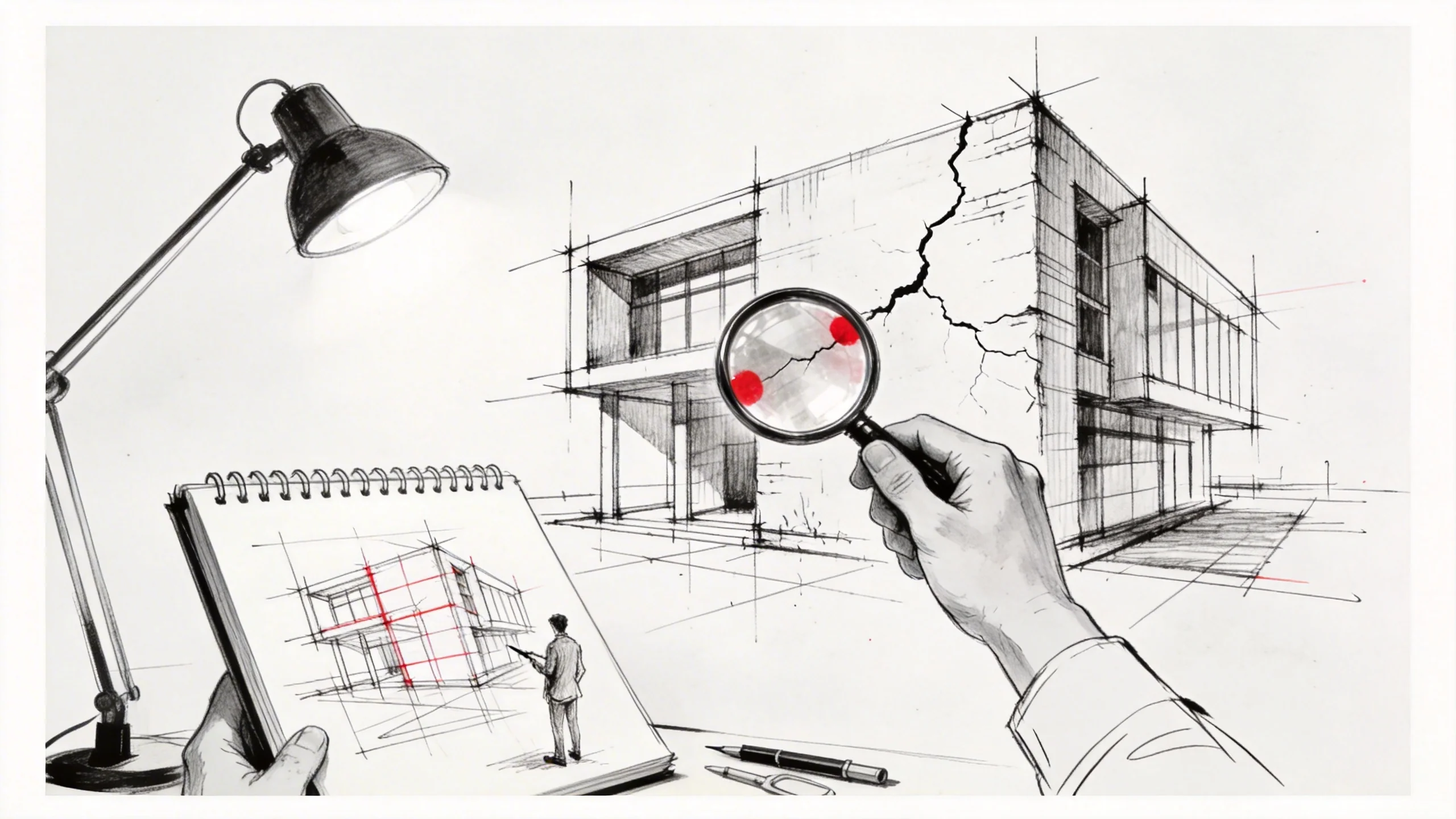

The essay concludes with a key observation: recognizing ugliness is easier than imagining beauty.
Great creators don’t typically envision perfect solutions first, then implement them. Their process is: notice flaws in existing solutions, then think “I can do better.”
Intolerance for mediocrity drives improvement. When you see poor design, you feel uncomfortable and want to improve it. This discomfort is taste at work.
But there’s a prerequisite: deep field knowledge. Laypeople can’t identify ugliness because they don’t know what “good” looks like. Only after encountering enough excellent work can you recognize poor work.
So cultivating taste means:
- Extensively experience excellent work
- Develop sensitivity to poor work
- Practice repeatedly, learning through revision
The formula for excellence = exacting standards + ability to meet them.
Standards alone are useless—you become an armchair critic, only criticizing without creating. Ability alone isn’t enough—you create technically perfect but spiritually hollow things. Both together enable truly great work.