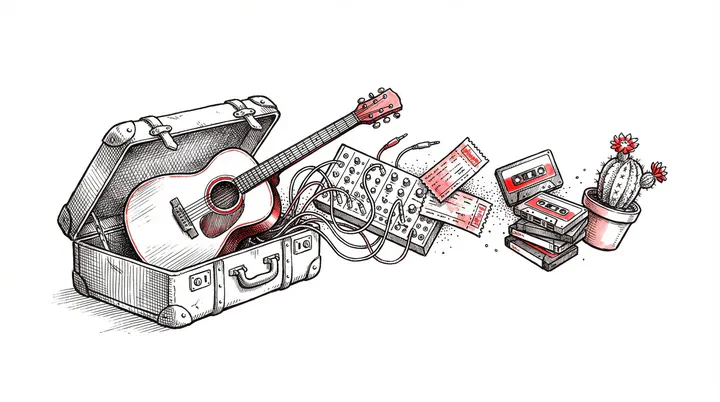
Luo Yonghao recently had a four-hour-plus deep conversation with Zhang Weiwei.
On the surface, it’s a “musician interview.” In reality, it’s a condensed history of Chinese social transformation in the 1990s. There’s so much in it that makes you want to slap the table in amazement. Let’s break it down.
Baiyin: A City “Built from Scratch”
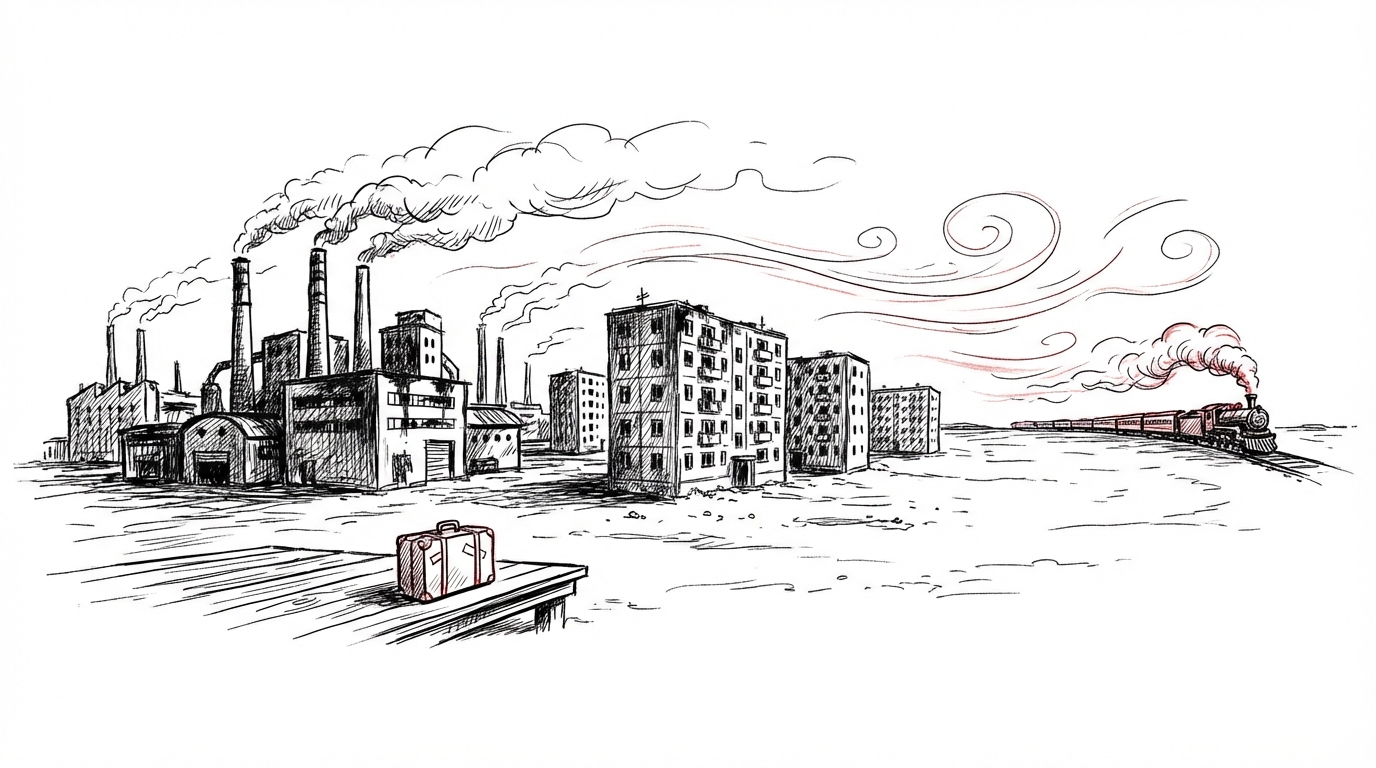
Zhang Weiwei was born in 1976 in Baiyin, Gansu Province.
Baiyin is a peculiar place. It was literally “built from scratch” because of mineral resources. The entire population came from all over the country, so there’s no concept of “locals.” Every Chinese New Year, the city practically empties out because everyone goes back to their actual hometowns. If you were still in Baiyin on New Year’s Eve, people assumed your family was a failure.
The city had its own hierarchy: kids from Baiyin Nonferrous Metals Company (the main mine) looked down on kids from supporting factories (textile mills, cotton mills). Girls from the mine district usually wouldn’t marry men from the supporting units.
Zhang Weiwei’s father was a self-taught music teacher at Baiyin Company. He was extremely strict with his son, saving every penny to buy Baiyin’s first private piano and forcing Zhang Weiwei to practice piano and clarinet.
For a young boy, this kind of suffocating education was exactly as oppressive as you’d imagine.
The “Piano Show”: When Talent Beat Fists
The turning point came at an unexpected moment.
As a teenager, Zhang Weiwei lived in an environment rife with schoolyard bullying. Baiyin schools were full of “boy gangs” — groups of fashion-conscious, violence-embracing tough kids. They had their own trends: one hand in the pocket, bell-bottoms modified into tapered pants.
A guy named Guo Long, one grade above, had Zhang Weiwei in his sights. Guo Long had assembled a good-looking “crew” and regularly shook down Zhang Weiwei for pocket money and cigarettes.
But one day, Guo Long brought four of the prettiest girls in school to Zhang Weiwei’s house to see the piano. Zhang Weiwei played “Für Elise.”
In that instant, every girl’s attention was on him.
Guo Long got it immediately: talent beats fists.
After that, Guo Long started learning drums, and the two went from enemies to lifelong brothers. This friendship, born from bullying, has lasted over thirty years. Zhang Weiwei says they’ve fought like they “got divorced twenty times,” but now they completely trust each other.
1994: The Year of Spiritual Nuclear Explosion
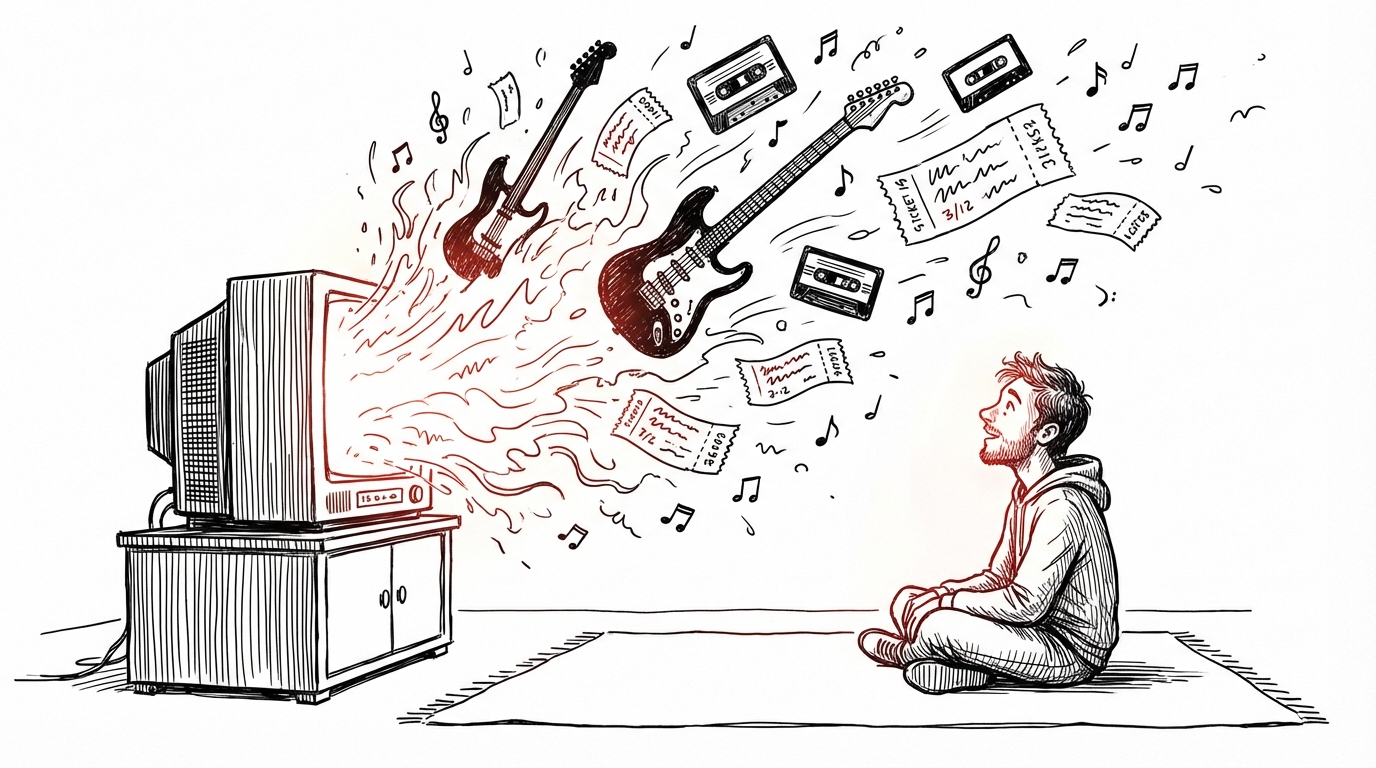
1994 was Zhang Weiwei’s watershed moment.
That year, the “Magic Stone Trio” (the three legendary rockers) held their iconic concert at the Hong Kong Coliseum. For 18-year-old Zhang Weiwei, it was nothing short of a spiritual nuclear explosion.
His favorite was Zhang Chu, whose lyrics weren’t the lofty literary poetry of the 80s but rather observations that grew naturally from everyday life. Songs about ordinary people, but with deeply moving poetry inside.
This taught young Zhang Weiwei something crucial: poetry isn’t somewhere far away — it’s right there in the lives of ordinary people around you.
How obsessed were he and Guo Long? Once, when applying for swimming passes, they deliberately wrote “He Yong,” “Zhang Chu,” and “Dou Wei” as their fake names — just to hear the staff call out these names at the ticket gate.
Guangzhou Tunnels and Beijing Grease
After deciding to pursue music, Zhang Weiwei and Guo Long embarked on what would become a brutal journey. Before Beijing, they nearly starved in Guangzhou.
They’d been lured there by a friend’s promises. After landing, they found no one waiting. Penniless, they survived on crackers and slapped each other’s faces to suppress hunger. Eventually, they busked in the tunnel beneath Tianhe City — Zhang Weiwei on guitar, Guo Long banging on a garbage can.
They didn’t sing pop songs. They performed Zhang Chu and He Yong. Two guys from the Northwest bellowing in a tunnel, often singing themselves to tears, loud enough to drive away every other busker.
They eventually screamed their way to enough money for train tickets back to Lanzhou.
On July 18, 1998, Zhang Weiwei officially arrived in Beijing. He lived in Liulangzhuang, Haidian — a village packed with drifting artists. He crashed in a friend’s partitioned room, listening to Beijing Music Radio every night.
To survive, he learned Wubi typing and cleaned kitchen exhaust hoods. In Beijing’s brutal winter, biking to jobs with the wind cutting his face like a knife, grease under his fingernails that wouldn’t wash out for two weeks.
Later, he sang at bars in Sanlitun and Houhai. Forty songs a night. Faye Wong’s “I’m Willing” and Xinjiang folk songs. The pay was decent, but he felt a deep sense of humiliation — he couldn’t fit into that lavish nightlife world. After singing, he’d slink away on his bicycle.
Wild Children: Making Music Like Farmers
What truly transformed Zhang Weiwei’s musical worldview was the Wild Children band.
Xiao Suo (An Qingjun) and Zhang Quan were the band’s founders and Zhang Weiwei’s mentors. Wild Children gave him a revolutionary insight: you can make music as simply and honestly as a farmer works the land.
What does that mean?
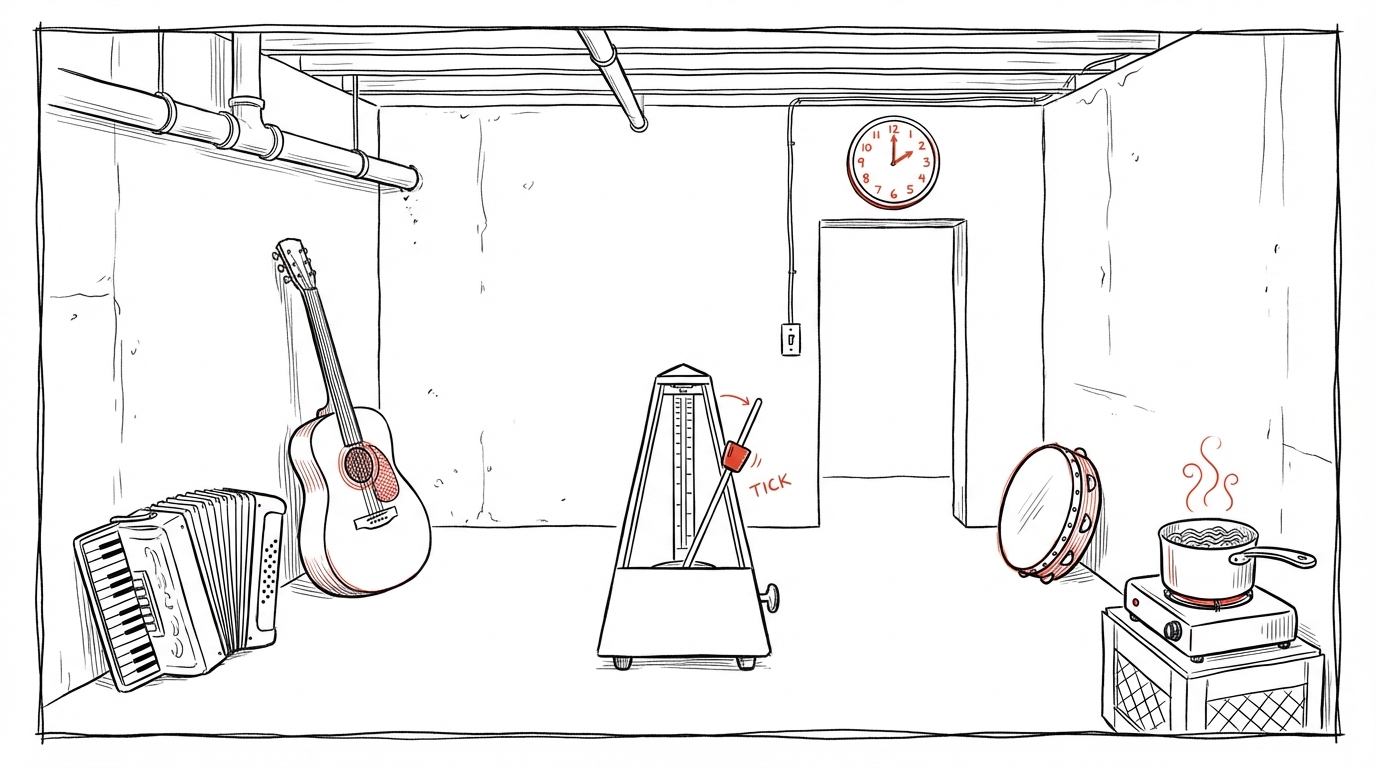
They rehearsed in the basement of the Oriental Song and Dance Troupe. Every day: cook lunch, wait for the smoke to clear, then start the metronome at exactly 2 PM and rehearse until 6 PM.
Every single day. No exceptions.
This “farmer’s discipline” made Zhang Weiwei understand the essence of making music for the first time: don’t wait for inspiration — just show up and till the soil, day after day.
Later, they opened He Bar (River Bar) on Sanlitun South Street. It was a golden era for Chinese folk music. Rehearse in the afternoon, perform at night. Zhang Weiwei recalls everyone standing tall, poor but unafraid. Xiao Suo would make lamb noodle soup for everyone, and doing laundry felt like a holiday.
In 2003, He Bar closed because of SARS.
In 2004, Xiao Suo died of stomach cancer.
Zhang Weiwei says that period was deeply depressing. Many bands dissolved at the same time. He felt everyone was powerless against the tides of change.
Xiao Suo’s death taught him something: being a sideman is like flying in someone else’s dream. When they wake up, you have nowhere to fly. You have to build your own world.
First Solo Album at 36
In 2012, Zhang Weiwei released his first solo album, “Baiyin Hotel.”
He was 36.
After nearly twenty years grinding in the music industry, he could finally support himself with his own original music. That same year, he moved to Dali.
But his breakout hit was a song called “The Rice Shop.”
Written during his most desperate days, its imagery of “washing hair” and “busy sailors” was really his prayer for a stable, beautiful life.
After “The Rice Shop” blew up, he experienced a classic creator’s dilemma: audiences only responded to that one song. Some peers mocked it as a “little pop ditty.” He considered never performing it again.
Then at a concert, he watched a girl cry from start to finish during the song. That’s when it clicked: music is fundamentally about comfort and connection. Even a “pop song,” if it sincerely moves people, has value.
He now says his earlier resistance was “childish.”
Father’s Death and Midlife Crisis
In 2015, Zhang Weiwei’s father passed away.
Watching the formidable man he’d “battled his whole life” collapse in the ICU, he was shaken to his core by life’s fragility.
This triggered a severe midlife crisis. Insomnia, anxiety, pessimism — lasting years. He questioned the meaning of his past life and even considered quitting music entirely to drive for a ride-sharing app or open a bar.
Meanwhile, in Dali, he discovered that his guitar playing had entered an “infinite loop.” Same posture, same tone, same expression. His soul felt like it had left his body, leaving behind a mechanical husk.
He’d play for hours and realize the acoustic guitar could no longer move him at all.
Electronic Music: Breaking Through the Wall
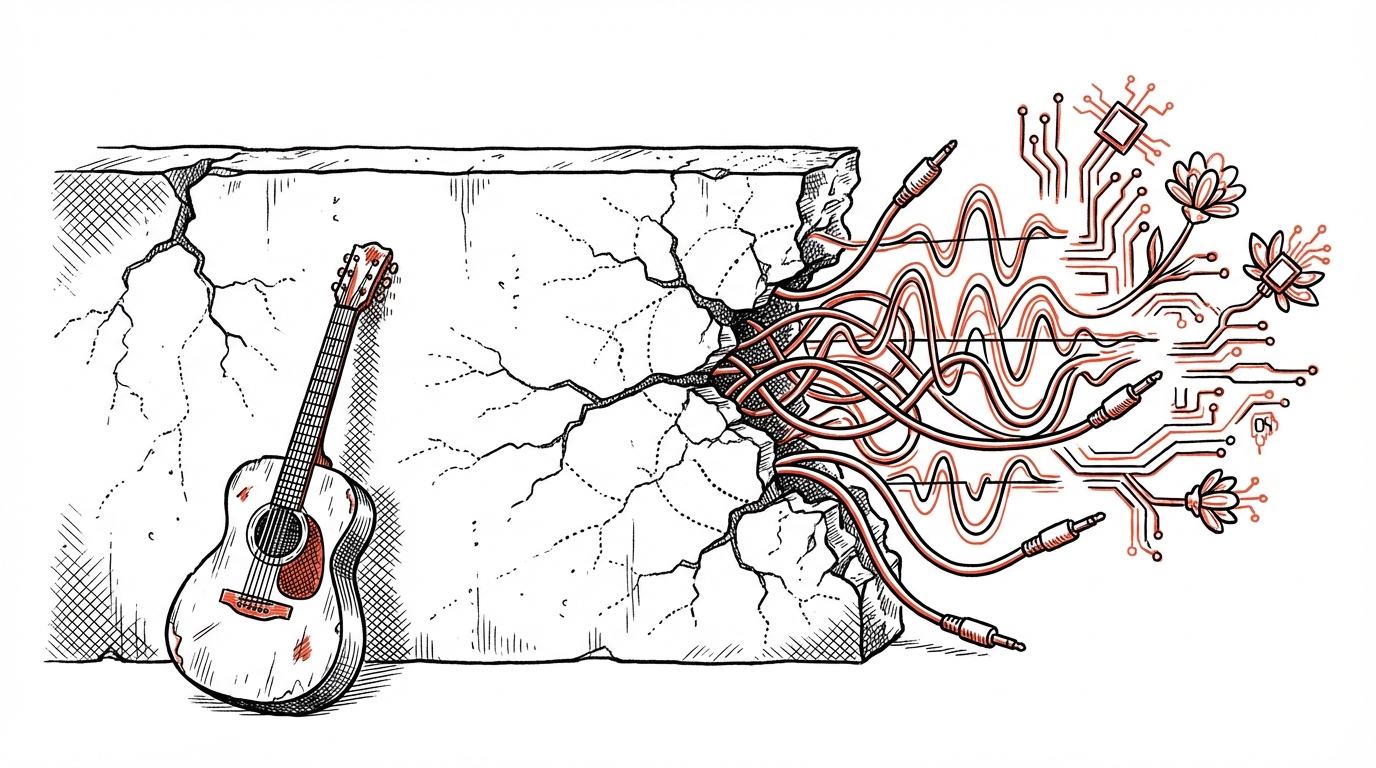
To escape this crisis, Zhang Weiwei moved to Shanghai and buried himself in synthesizers and electronic music.
The decision changed everything.
Electronic music requires one person to handle the entire pipeline: structure, arrangement, and mixing. Unlike folk music’s collaborative nature, electronic music demands you do everything yourself. Zhang Weiwei says this gave him unprecedented confidence — the feeling that he could learn anything.
More importantly, electronic music opened an entirely new dimension of expression.
In his folk era, imagery was built through lyrics. But electronic music taught him to create imagery directly through timbre and spatial sound. He cites the bagpipe timbre when a ship lands in “Dune” — that sound alone carries the weight of a family’s entire history.
In 2023, he released the electronic album “Shamli.”
This album was his spiritual conversation with his late father. Through music, he filled in all the words left unsaid. He describes the catharsis as “setting off a firework.”
Zhang Weiwei uses a beautiful metaphor for this breakthrough: “passing through walls.” He says he once thought he’d broken through one wall, only to find an even thicker, harder wall behind it. Electronic music helped him tear down the thing that had been blocking him all along.
Folk Music’s Purest Form Lives in Prison
During the conversation, Zhang Weiwei shared a fascinating insight: folk music’s most original, most moving form is preserved in prison.
Prisoners, lacking entertainment, compete by setting new lyrics to classic melodies passed down through generations. The tunes have been refined by centuries of selection; the lyrics reflect raw, authentic emotion. This “prison song” culture is extraordinarily vital.
He critiques modern folk music’s “intellectualization.” Too much folk has been hijacked by the label of “poetry and distant places,” becoming fake and pretentious. Folk’s core should be narrative — reflecting the most authentic life, just like prison songs do.
The AI Era: Doomsday for Second-Rate Creators
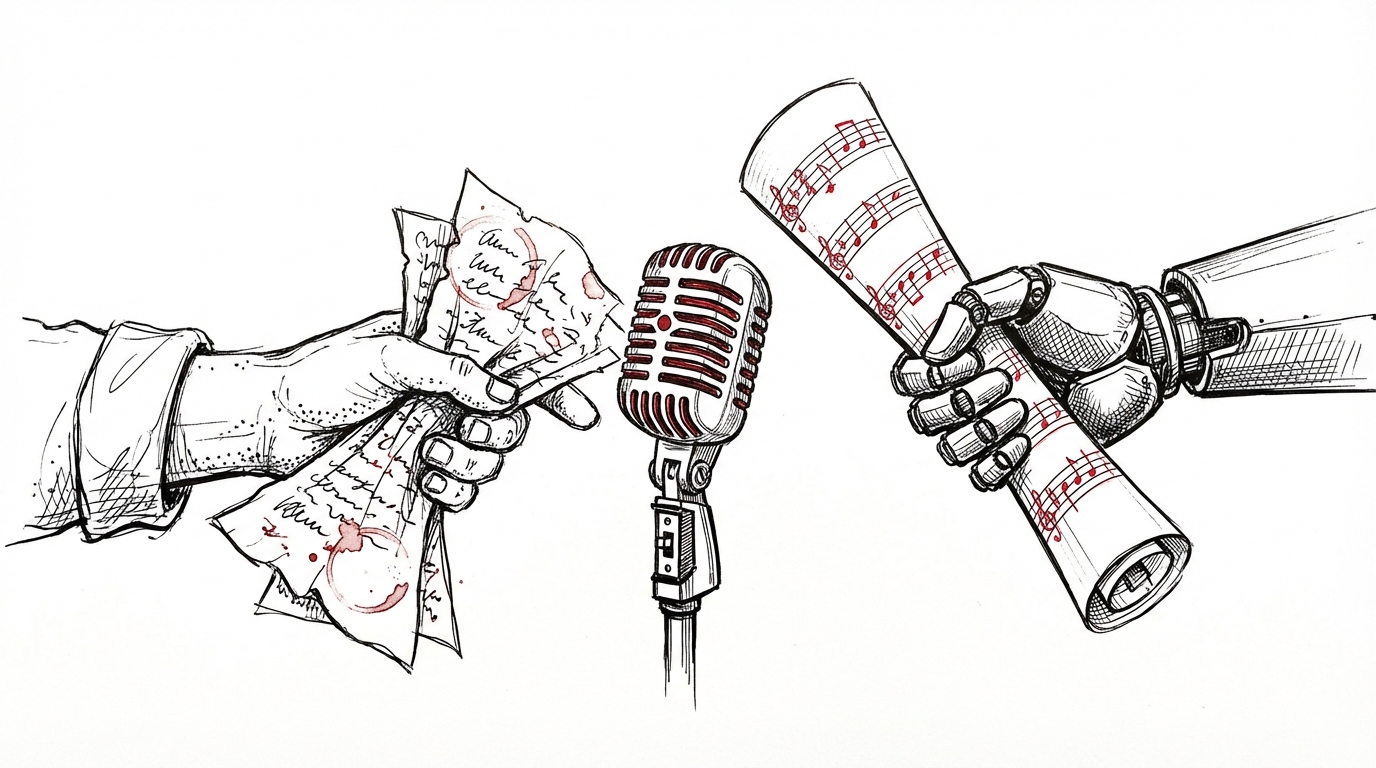
Zhang Weiwei’s views on AI are sharp.
He believes AI (mentioning Suno and Doubao) can already produce decent second-rate work. This means session musicians who lack originality and simply provide reliable, standardized production will be the first to go.
What kind of creators won’t be replaced?
His answer: people with intensely strong personalities, with lots of “miscellaneous stuff” accumulated in their being. Only those with deeply personal emotional experiences and a unique soul can survive the AI wave a little longer.
This insight is remarkably relevant to today’s AI discourse. Technology can replicate average quality, but it cannot replicate one person’s unique life experiences and the expression born from them.
At 50: Finally Learning to Take Care of Himself
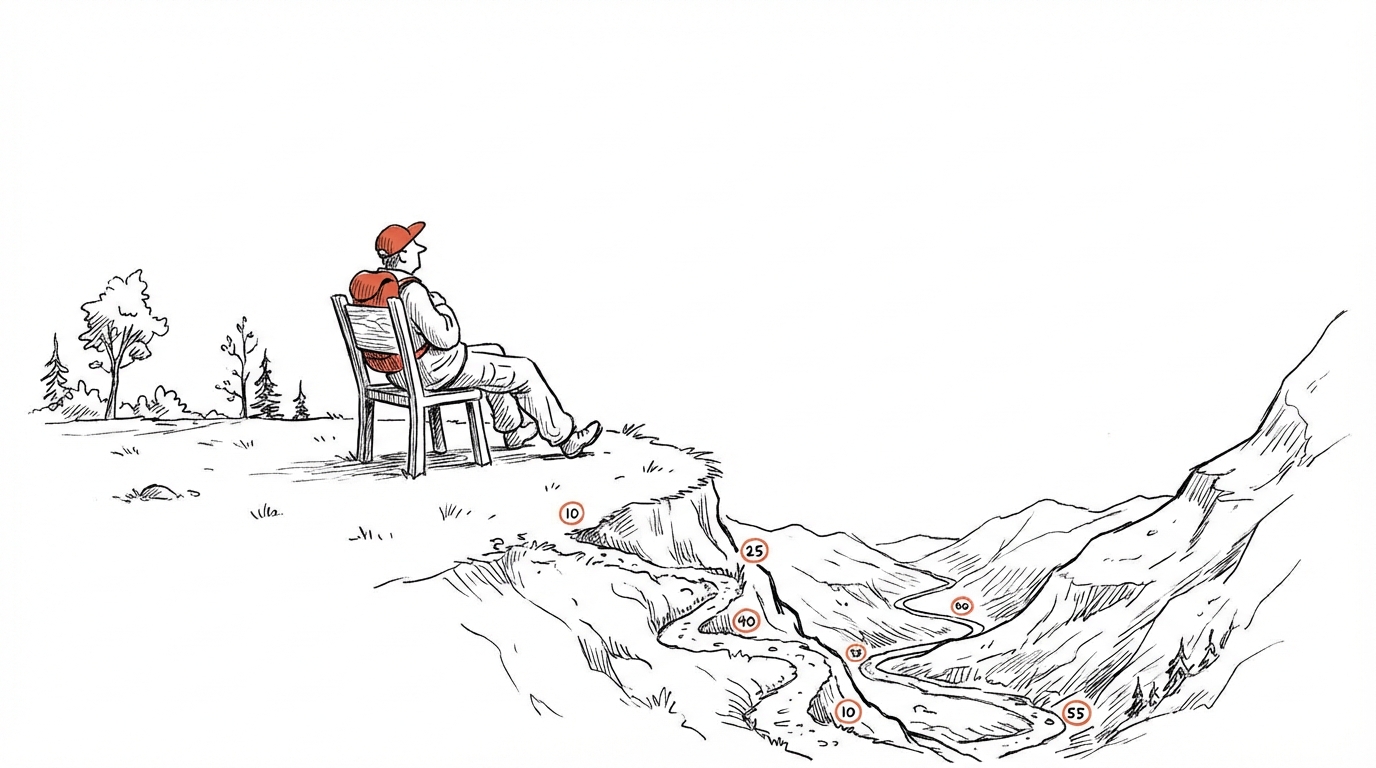
Zhang Weiwei is 50 this year.
On his 50th birthday, he felt he had truly “grown up.”
This “growing up” isn’t about fame or fortune — it’s psychological maturity: learning not to make himself so miserable and conflicted, knowing how to regulate himself into a proper state. Want to go clubbing? Go. But accept tomorrow’s exhaustion as part of the deal.
First solo album at 36. Learning to take care of himself at 50.
This is perhaps the deepest takeaway from this conversation. In an era obsessed with the “35-year-old crisis,” Zhang Weiwei’s life timeline tells us: every stage of life has its own rhythm.
No need to rush. And rushing won’t help.
Next Album: A Chronicle of the 90s
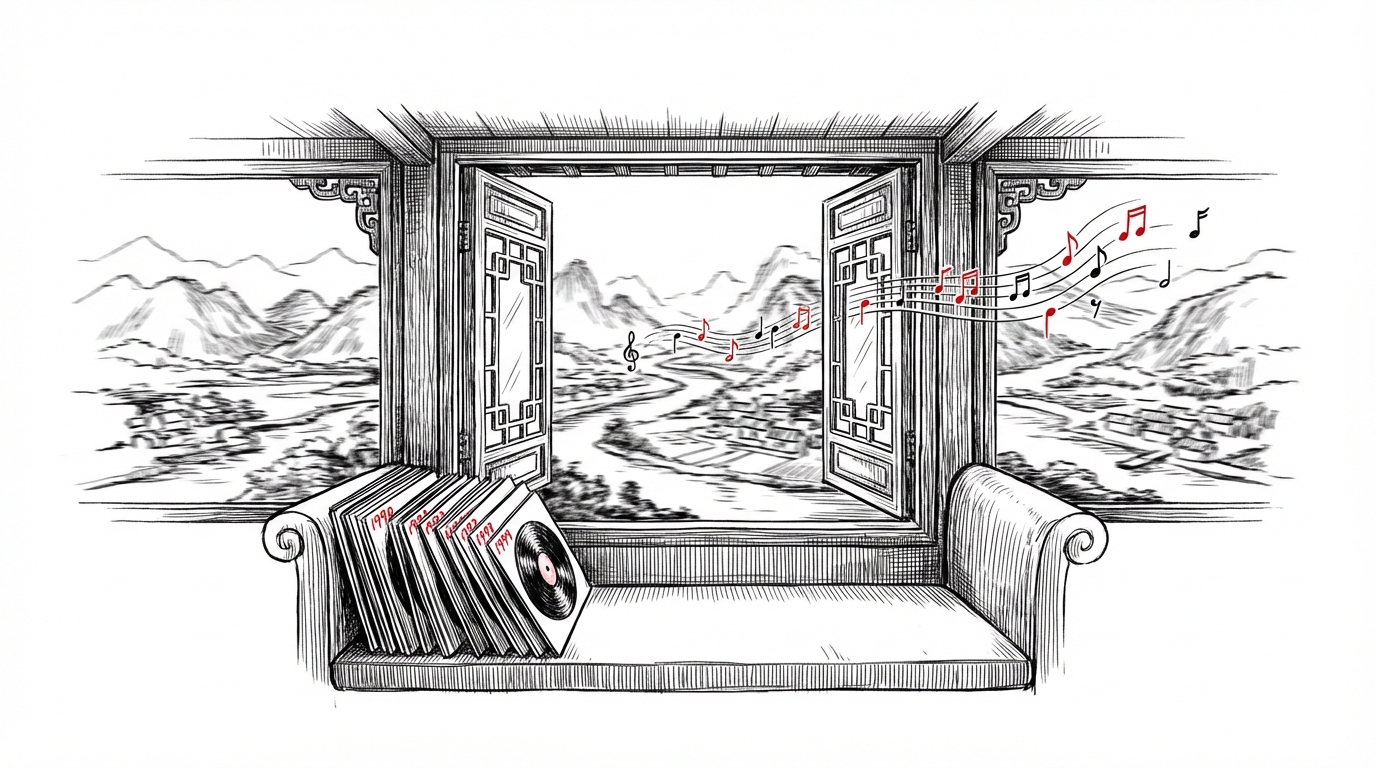
Zhang Weiwei is working on an album called “The 90s.”
Ten songs, each corresponding to one year from 1990 to 1999. He describes it as a “novel with a soundtrack” or “a movie without film.” Blending folk narrative with electronic atmosphere, creating the vast, ethereal feeling of someone riding a train across the entire country, changing their life forever.
He says he doesn’t want the grandiose “era narrative” because that’s too superficial. He wants to bring the story back to specific characters, specific people. Let them speak in “human words” to express the era.
Luo Yonghao reminded him: don’t let the pursuit of grand structure constrain natural expression — “going by feel might be better.”
Great advice. Because what has always moved people about Zhang Weiwei isn’t grand narrative, but the poetry that grows from the cracks of everyday life.
Just like the hair-washing and sailors in “The Rice Shop.”
A thought: After watching this conversation, I think Zhang Weiwei’s story is a textbook case of the “late bloomer.” First album at 36. Learning electronic music at 50. His life proves one thing: as long as you’re still creating sincerely, time is on your side.
In an era when AI is rapidly replacing mediocre creation, this point matters even more. Technology can imitate the second-rate, but it can never replicate the unique expression distilled from one person’s decades of lived experience.
That’s probably why Zhang Weiwei says it’s the “miscellaneous stuff” that’s most valuable.